
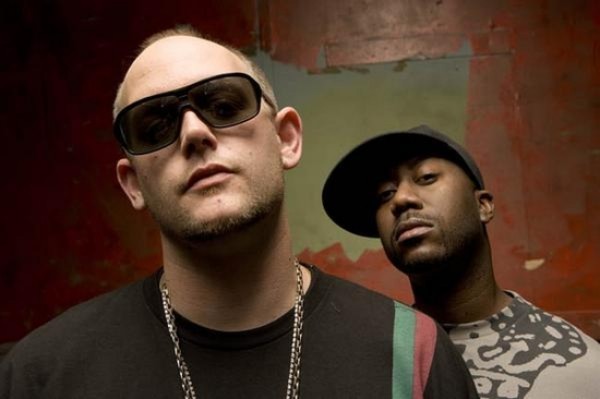
[Interview] Styles of Beyond: Uncrowned Kings
RubyHornet: You mentioned 2000 Fold, that remains one of my favorite Hip Hop albums. I discovered it when it came out, just through local record stores here and I definitely enjoyed Megadef, too. I’m wondering if there are any feelings or bitterness of ‘damn, this hasn’t turned out how we wanted,’ or does that not come up at all?
Ryu: Oh, it does. I think with Styles of Beyond, in my opinion, we’ve always been a top 5 group and we could’ve been major major players in the rap industry. I think we’ve been plagued with a bunch of bad business dealings. As soon as we came out with 2000 Fold, the buzz was on us so crazy that everybody wanted to sign us, stuff like that, which is good but we went with the Dust Brothers. They were the first people to sign us, and that was a terrible decision. Then we ended up getting stuck on that label for so long that we couldn’t release something else until we got released from that record contract. Then we did and we came out with Megadef. And then after Megadef, boom, here we go again, we get another record deal. And so we did that record deal with Warner Bros. And Warner Bros. is a bad situation for us and now we’re stuck on Warner Bros. for a couple years and nothing comes out. You get stuck in that situation and time flies by and new groups come out and you’ve never really reached your potential. With that being said, we’ve always been able to sustain our brand and our business because we keep getting good opportunities as well. You know, Megadef comes out and then boom, we’re on the Fort Minor record and that ends up going platinum, and we’re going around the world and traveling and doing shows for 100,000 people. After that the Warner Bros. situation doesn’t work out, so I went and started The Get Busy Committee and then that ended up taking me somewhere else too. We’ve been fortunate enough to stay around in an industry where a lot of people wouldn’t be around half as long as us, so we’ve been fortunate in that respect.
RubyHornet: I was going to ask you about working on the Fort Minor project with Mike Shinoda and seeing where he goes with Linkin Park. Does it give you a different perspective of the music industry or even restore any kind of faith in it seeing him succeed?
Tak: I definitely think it gives us a different perspective because of the whole experience of the Fort Minor record and what we went through was completely different. It really really opened our eyes to the world. We were fortunate in that sense too, like Ryu said, to tour the world on a big stage. In comparison I think it’s, again, you’re talking about someone who’s such a heavy hitter, Mike Shinoda from Linkin Park. That’s almost automatic and they’re such a world renowned brand that they almost can’t lose. With someone of that caliber, with that kind of power and success, a lot more doors are open for someone like him. For us to work with him and get a piece of that was great. But as we stand alone, yeah, we hold our weight, but we don’t have those doors open like that so it’s a little more difficult for us.
Ryu: It taught me, and I feel Tak as well, a valuable lesson. A lot of people come into this business piggybacking off of other people’s success. For me, personally, I thought that would somehow translate into Styles of Beyond success, but that’s not the case. It doesn’t matter if it’s Linkin Park or 50 Cent or whoever, you have to carve out your own niche and you got to put in your own work, because these people have their own careers to run. They don’t have all day to be sitting there messing around with you. If you’re fortunate enough to be in a situation like that, use it your advantage because Linkin Park success doesn’t necessarily translate into Styles of Beyond success. But you know, a lot of those fans do support us and we appreciate them. A lot of Fort Minor fans have been riding with Styles of Beyond for a long time. You do get your fans from that too, but you also got to carve out your own way in anything you do.
RubyHornet: Did the Warner Bros. problems hit Mike Shinoda hard at all as well? It happened after Fort Minor and while were part of his label. Did it effect your relationship at all?
Tak: The truth of it is, it did. To be honest, yeah, I just don’t want to come off like a soundclip or anything like that, like there’s any bad blood. But yeah, it did. We weren’t expecting anything from Mike or anything like that. We’re family, we really go back, but the way it ended and the way it went down was so blindsided. And for me, it was just unexpected and the way it fizzled out at the end of the day, I was really let down and disappointed.
Ryu: We’ve had time to digest what happened and things like that. From my perspective, I think Mike had all the right intentions. Machine Shop records had all the right intentions because they wouldn’t have signed us in the first place if they didn’t actually believe in us. But what happens when you’re at a label that’s a subsidiary of a major, at the end of the day, you still got to answer to Warner Bros. And Warner Bros, I think when we first signed to them they believed in us and wanted us to come out. But then they had a whole regime change, everybody got fired, they laid off like 400 people and brought in all these new people that no idea who we were or what we were doing. They really weren’t willing to do anything for us. They were offering a 50K budget for promo and sample clearances, you know. A lot of it had to do with Tom Wally at Warner Bros more than Mike Shinoda. Mike Shinoda can only do and say so much. So, when you’re going through it you don’t really have time to figure out who did what and whatever. As time went by, it’s not really Shinoda’s fault. There’s certain things that if we could do it again, it would’ve been done better I’m sure. And there are certain things I would have done better, but it was all a new experience to us. He didn’t want failure for his label because Linkin Park doesn’t really fail at anything. I’m pretty sure he didn’t want this.