
RH Review: The Lollapalooza Experience (2018)
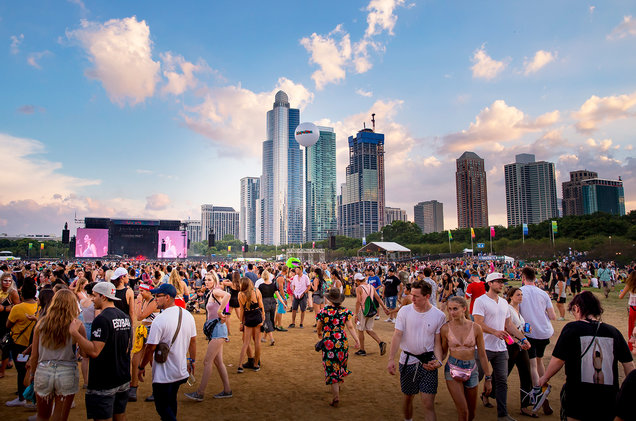
After a long four-day weekend of countless live acts, underground after parties, and spending over a hundred dollars in Uber’s; it feels great to be in the AC recapping the Lollapalooza experience.
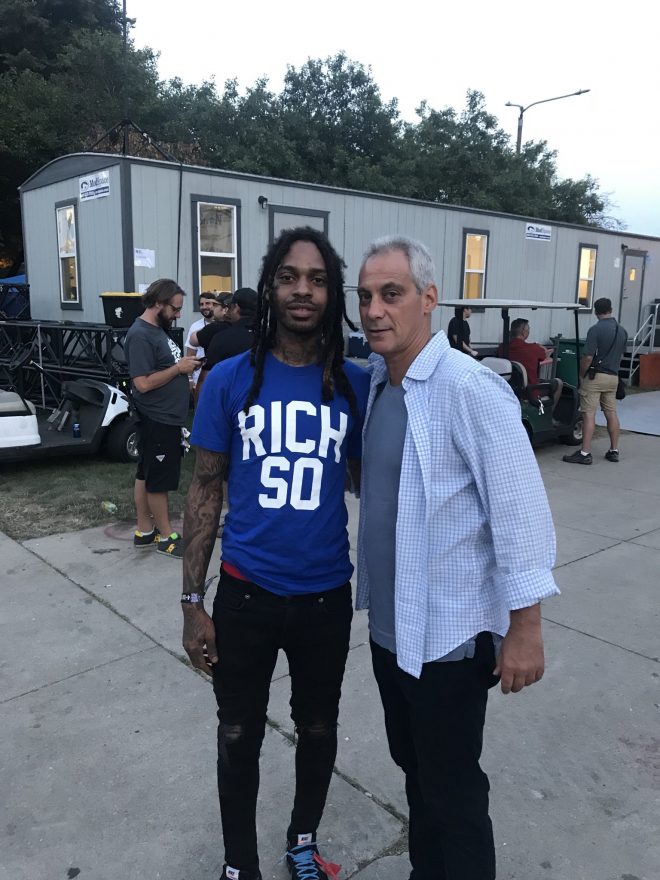
Arriving early on Thursday to see Valee was the perfect way to start off the festival. The energy during “Two 16’s” was insane. One person, who looked about 17, was screaming every lyric directly in my ear. If I wasn’t sure about the lyrics, I certainly am now. Also the photo below is legendary.
After helping tear down the temporary studio set up hosted by Closed Sessions at SoHo House, I found my way to the front of the Bud Light stage to see Travis Scott. With his new album Astroworld dropping an hour after his performance, the crowd was ridiculous. I had a difficult time recording any of the show due to the mosh pits.
Tyler The Creator and Post Malone were two notable acts on Friday. Post Malone receives a lot of hate in the hip-hop community, but his set was much better than expected. His voice sounded strong and it felt like the entire audience knew every word during his performance. I added a clip from Tyler The Creator’s set below to give an idea of the audience.
[iframe id="https://player.vimeo.com/video/283980497"]
Saturday was the least exciting day for me. I missed Femdot from sleeping in too long. Other than LL Cool J, the other acts I saw were disappointing. Lil Pump found a way to be worse than my already low expectations. GoldLink sounded as if he didn’t have enough material for an entire hour. The energy of the festival was redeemed during Hippie Sabotage’s performance at their after party. The two brothers from Sacramento killed it.
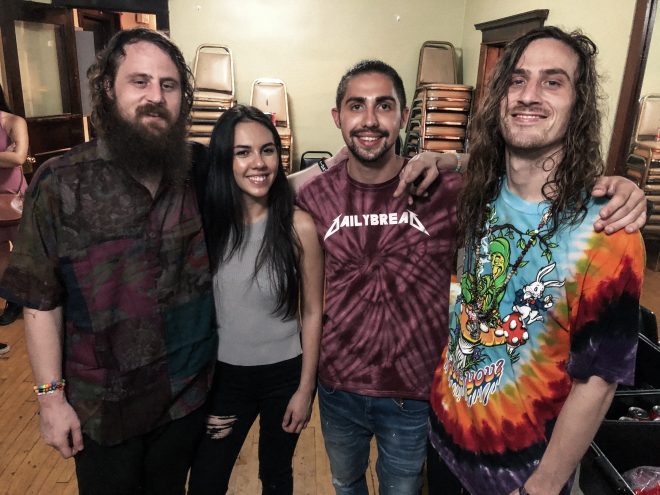
The final day ended strong. Knox Fortune had the most intimate show of the weekend. Their crowd was also the most mature I saw all weekend, with the median age above 18 for the first time. Lil Uzi Vert is a rock star. To think about seeing him at the Metro just two years ago, to playing at the main stage at Lolla is crazy. The crowd loved him.
[iframe id="https://player.vimeo.com/video/283980635"]
All in all, the weekend was a success. It’s almost hard to believe Lolla is over.
RH First Look: Sierra Sellers
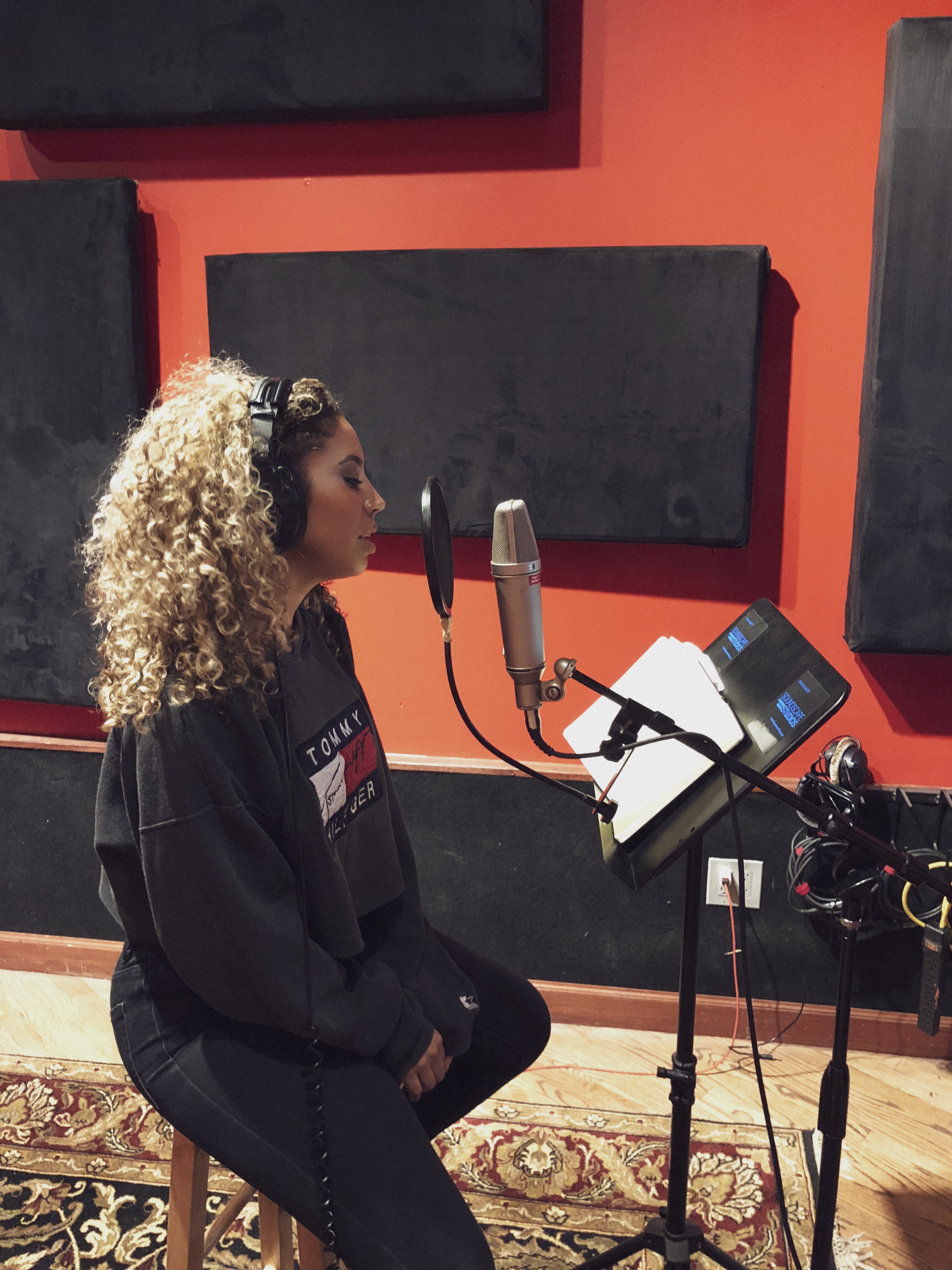
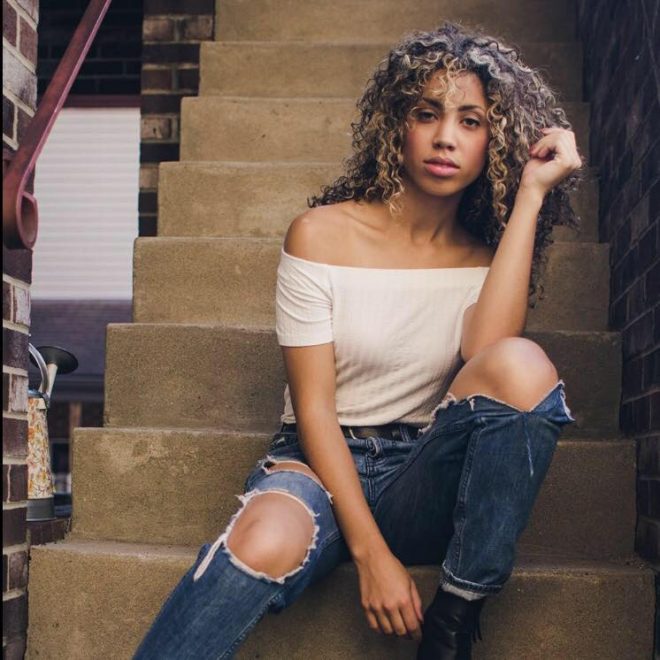
The next edition to our RH First Look series is with Sierra Sellers, an upcoming singer/songwriter from Pittsburgh, PA. Sierra's music blends acoustic textures along with neo-soul and R&B influences to create a smooth lo-fi sound. With a self titled project and a collection of singles out, it's exciting to see what she has in store. We sat down with her to discuss growing up in Pittsburgh, musical influences, and what we should be on the lookout for in the future. Check out our interview below:
rubyhornet: For any of our readers not familiar, who is Sierra Sellers?
Sierra Sellers: If you were to meet me and spend time with me you would learn I’m very kind, humble and shy. Then when you really get to know me, I’m super goofy. I have a lot love for music and kids. I am really ambitious and have a business mind. I’m still trying to figure out who I am.
rubyhornet: You started singing in the church at a young age. Was there anyone that encouraged you to begin doing this?
Sierra Sellers: No one had to encourage me to sing in church. Singing in church was something I felt compelled to do. It’s not a forced moment, it’s something that naturally happened. Singing for god is an entire different feeling than singing for yourself. It’s hard to explain. But you feel it throughout your entire body and you don’t have to think about it.
rubyhornet: How did the environment at the church, growing up in Sewickley (Pittsburgh), and life in general impact the music you were listening to growing up?
Sierra Sellers: I had a unique upbringing. My mother passed away when I was five. My dad worked late on the weekends to take care of my sister and I. I would spend weekends with either my mom or dads side of the family. I’m half black and half white. One weekend I would spend with my mom’s side which listened to a lot of Neo-soul, R&B, and Hip-hop. Then with my dad’s side we listened to strictly country or Led Zeppelin. The contrast and exposure of genres was interesting. I would go from Johnny Cash to Jodeci in a day.
rubyhornet: You were originally going to attend college on a basketball scholarship. Did you end up going to college or were you fully focused on music at this point?
Sierra Sellers: Growing up in my environment, I knew I wanted to go to college because I wanted to shape my own life. I knew I had to make it through an academic scholarship or through sports. I got a basketball scholarship, but so much time was concentrated on basketball and not music. When it was time to commit for a full ride or the D3 offer, I took the D3 offer. This is because if I quit basketball they couldn’t take away the scholarship. I played for a month and then a quit, telling the coach I spent so much time playing basketball to get to college, and now that I’m here I want to focus on music. I still hoop for fun.
rubyhornet: How does the creative process start for you when working on something new?
Sierra Sellers: I am a Pisces which makes me a dreamer. I typically start with the beat. I close my eyes and a movie plays in my mind while I narrate it. The first idea I have I usually go with. Sometimes it’s just one word and I’ll create a word web around that.
rubyhornet: What does stepping outside the box mean to you?
Sierra Sellers: Challenging myself to try things I’m capable of but that I was afraid to do. Growing up in the church you hear amazing singers with amazing voices that no one can touch. I don’t think I have a voice like that. Sometimes that insecurity holds me back. I like to be in the studio with people that push me in the vocal performance aspect. Song writing for different genres like pop was super interesting and challenging also.
rubyhornet: The percussion on songs like, “Too Good” and “Be Wise” have a traditional Hip-hop influence to my ear. What other factors effect how your music sounds?
Sierra Sellers: I never listened to the radio growing up, so when people say, oh that song came out when I was in middle school or high school, I don't relate in the same way. I listened to Lauryn Hill, Farside, A Tribe Called Quest, and all these older 90’s artists. I found Prince and Michael Jackson at an older age. I still couldn’t tell you what the number 1 song is right now. I hate when the radio plays the same 5 songs.
rubyhornet: What should fans expect in the near future?
Sierra Sellers: I plan to put out a project. My intention is put it out in the fall. I hate trapping myself by saying what’s next. I don’t like to pressure myself or anyone I work with by doing that. The time and freedom I have right now to build myself is great.
First Look: KOTA The Friend
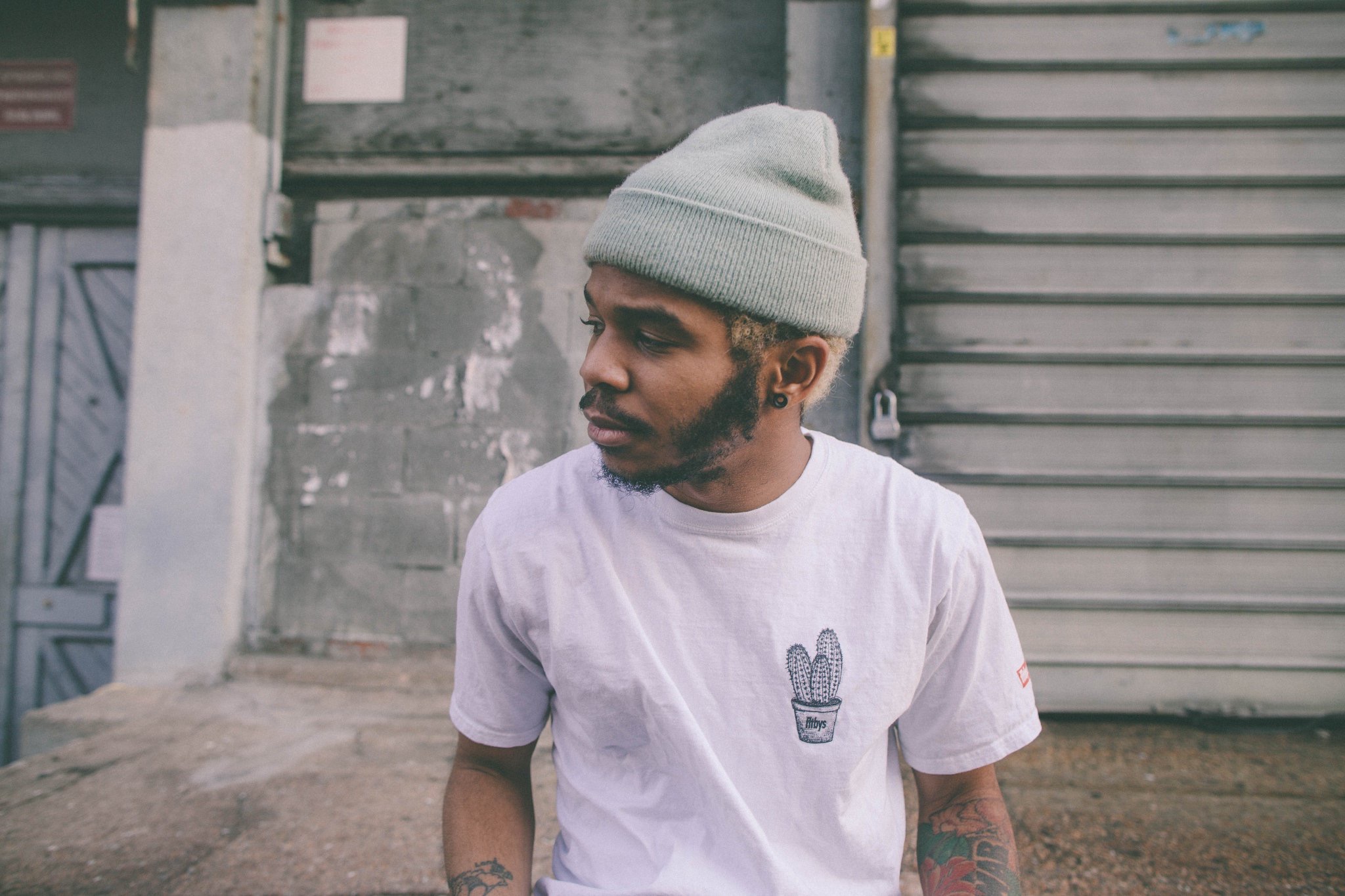
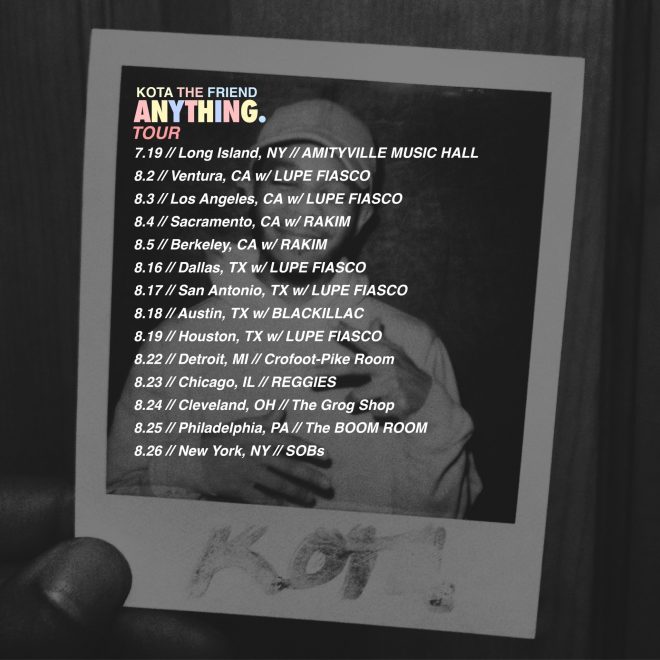
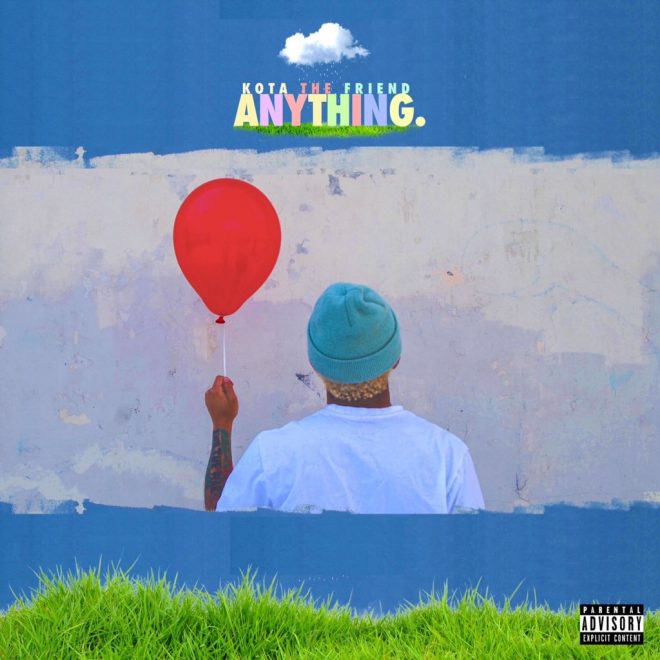
The 25 years young Brooklyn native, KOTA The Friend, makes his first appearance on our pages today. With three solid projects, a collection of singles, videos, and more, the independent rapper has been on our radar for a minute. He will be playing at Reggies in Chicago on August 23rd.
KOTA manifests the classic New York style into a California paradise. Palm trees and sandy beaches contrast the depression and real life problems that can be faced when coming to age in New York. Check out our full interview below:
rubyhornet: For any of our readers not familiar, who is KOTA The Friend?
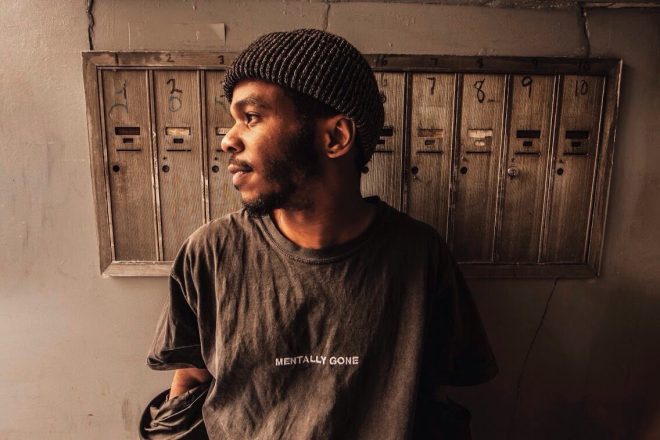
KOTA The Friend: KOTA The Friend is an artist in the purest sense of the word. I believe that while art can be monetized, it will outlive any industry. It will always be important. I’m a musician. I’m a classically trained trumpet player and I taught myself guitar, bass, and keyboard. I’ve been writing poetry since I could remember which made the transition to rapping seamless. I’m a self taught pro - cinematographer and video editor. I’ve shot hundreds of music videos for artists from New York City to California to Japan. I love creating and I create as much as I can.
rubyhornet: You were born and raised in New York, but you mention California a lot. What do these places mean to you?
KOTA The Friend: For a long time New York has represented some dark times in my life that I wanted to escape from. Out here on the East Coast we were constantly talking about getting out of the city and moving to LA where the sun is always shining and the palm trees tower over highways. My first 2 projects were mainly about escaping to find something new and better, so that’s why I reference California a lot.
New York is home, it’s where things get real for me. I’ve recently started to express my feelings towards my hometown and I plan on telling the stories of me and my friends in my new music + the album.
rubyhornet: What’s your definition of a friend?
KOTA The Friend: A friend is someone that you can depend on. A friend is someone that you can bring the worst news to and they can make you feel like its going to be okay. A friend will love you for the person you are and doesn’t judge you for being imperfect.
rubyhornet: Your lyrics are very honest. How do you approach writing a new song?
KOTA The Friend: Every song I write is true to my experience. Almost every time I begin with the music. I hear an instrumental and I get to writing, singing melodies and rapping gibberish. Then once I get in the groove I put my life onto the page until I’ve painted a vivid enough picture. I always tell the truth in my music because that’s the only way I can connect. You can tell when people are disingenuous so I keep it real.
rubyhornet: The growth from Palm Tree Liquor to Anything is evident. If you could go back in time and tell yourself anything while recording Palm Tree Liquor, what would that be?
KOTA The Friend: Thank you for noticing the growth! I honestly wouldn’t tell myself anything because my life is so beautiful now and I wouldn’t want to mess with the natural order. I was in such a dark place when I created Palm Tree Liquor and even Paloma Beach. Every day I’m just grateful that I’m no longer in that space and I’m reaching more people with my music.
rubyhornet: You speak on depression and suicide on past projects. What advise would you give to someone who feels boxed in due to their mental health? Has music helped you get out of this stage?
KOTA The Friend: It’s not always easy trying to get someone out of depression. A depressed person can often be their own worst enemy. In my personal experience dealing with depression, I felt alone like many others. I felt like a failure, like I didn’t matter, like even God was against me and I hated myself. I turned my life around when I started to be grateful for the little things I did have. I would tell a depressed person that they are worth so much and that they are in control even if they don’t feel like they are. Even if you’ve been making the same mistakes for 5 years you can decide to live your life different from this day on. You don’t have to be the negative things that “they” say or think you are. I would tell a depressed person to take time to get to know the real you. If you don’t like something about yourself you can change it but you have to be honest with yourself about who you are and then make adjustments. No matter what, don’t let the thoughts of others define you. They are dealing with their own struggles and imperfections. On top of all of that, IT’S NOT ALL ABOUT YOU. Other people are struggling mentally and it’s important to understand this. Be kind to everyone no matter what.
rubyhornet: As an independent artist is it a goal of yours to become signed?
KOTA The Friend: Not really. I like being indie. It’s super fun. But I don’t know what the future holds. I’m making music, feeding my family and I get to be around my son all the time so I’m happy right here
rubyhornet: What are some plans from here on out?
KOTA The Friend: Just keep making music, touring, experiencing new things, eating healthy, being a better person and keep showing my people love. That’s it.
RH Collectors: DJ RTC
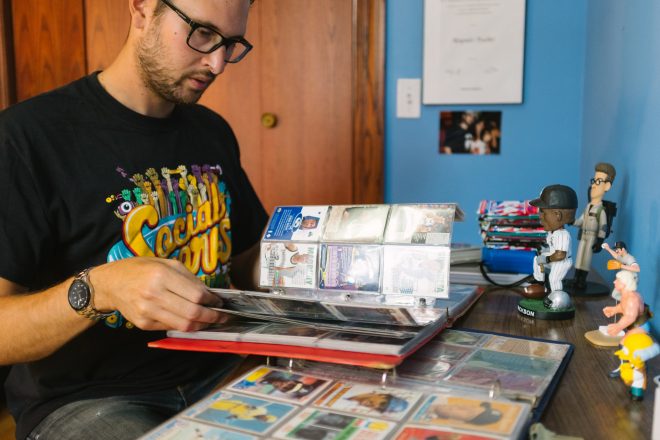
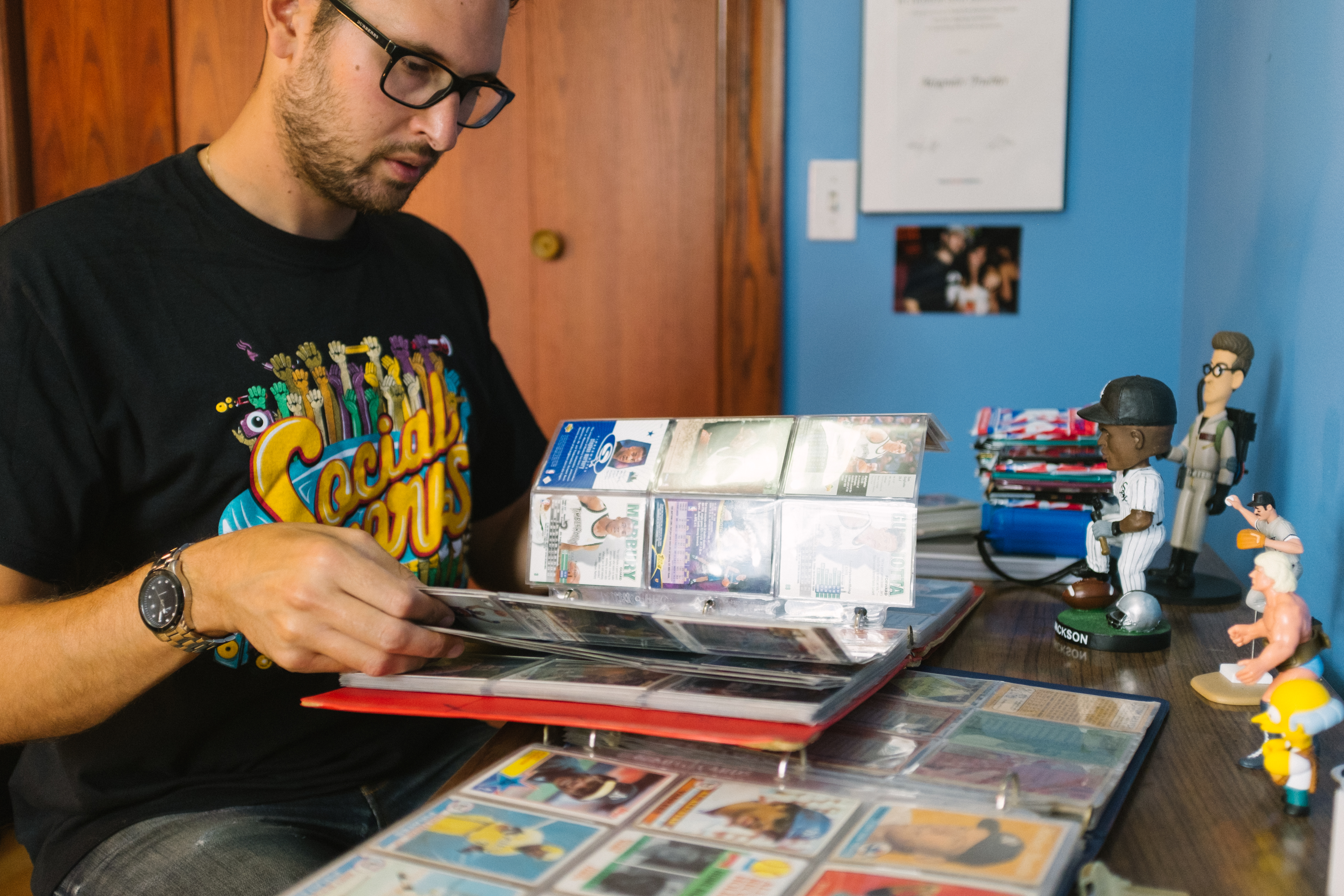
Many music heads are also collectors. There's a common thread between seeking out new and rare sounds and using that same drive to acquire and celebrate other passions that ties collectors of all kinds. RH Collectors is a series that aims to showcase the collections of the various music heads in Chicago and beyond. In our last edition, we spoke to the Stitch Gawd, who showed off her collection of art and memorabilia that she has collected throughout her time in the Chicago music scene. Today, we turn the spotlight onto Closed Sessions + rubyhornet honcho, DJ RTC.
Going back to his early childhood, RTC has been an avid baseball and basketball collector, and boasts an impressive collection. For this installment, I spent time with RTC's card collection and asked to speak on a few choice cards. Peep it below.
If you've got a collection you want to talk about, hit us up. We want to talk to you.
What got you into collecting cards?
I think it was partly playing sports, and playing on teams all based on major league teams. My first team was the [Atlanta] Braves. I was young, like 6 or 7 years old. I just remember watching the real Braves on TBS and all my teammates wanting to be certain players. The first baseball player I really knew and wanted to emulate was Dale Murphy. Later, my brother introduced the concept of baseball cards to me and I got into keeping stats and dove into the card collecting heavy with many of my friends. It turned into a big social activity. My friends and I all played in the same baseball league, and we all wanted to be like our favorite players. We picked our jersey numbers based on those players. We would hang out all day playing sports and/or trading cards. Then from there it became more obsessive, it was all about who could get the most rare cards in your peer group. It was a good era to be a kid in that the popularity of cards was at an all-time high. It was a great way to feel closer to the game.

Ozzie Guillen: 1985 Fleer Extended Rookie Card
Ozzie Guillen was a shortstop on the White Sox from 1985 to 1997. Then he briefly went to The Orioles, then the Braves, and ended his career with the Devil Rays. In 2003 he came back to manage the White Sox. Ozzie Guillen was my favorite baseball player growing up. I modeled my stance in little league after him, many coaches corrected that because it wasn’t an ideal stance for a little kid to have (fundamentally speaking). My dad started taking me to this card shop by Comiskey Park, and I also got a subscription to this magazine called Beckett that listed the value of baseball cards, and I started noticing this thing called the XRC card, which stood for “extended rookie card.” I saw Ozzie Guillen’s XRC in Beckett and finally tracked this down . I don't even know at what point I got it, but it took a while. My dad and I got it at Grandstand in Bridgeport. Definitely a prized card, many Sox fans around my age view Ozzie as the man. I can't speak for older or younger fans, but definitely in my age group, Ozzie was the man. If we could one day throw a Closed Sessions party with Ozzie Guillen in attendance, that’d be great.

Sandy Koufax: 1963 Topps
I connect with Koufax on many levels. One of the great things about baseball, why I also think I like it so much, is that my dad, he kind of got into it with me. My dad's older, he had me much later in life, when I was 10 he was already 55. For him, his generation of baseball player was from the ‘50s and 60’s. Sandy Koufax was revered in every Jewish household, he was one of the first athletes to proudly be Jewish. Game one of the 1965 World Series games Yom Kippur, which is the Jewish day of atonement. Even for Jews who don't go to synagogue regularly, Yom Kippur is the one day where you’re supposed to sit back and observe. Sandy Koufax was the Dodgers best pitch and was supposed to pitch that game, he decided to sit out and observe the holiday and became a Jewish folk hero. That’s one piece of it for me, another is in Sunday School there was this teacher who always labeled me as a trouble maker for whatever reason. Whenever anyone did something, he would blame me and send me to the library. So I would be able to get out of Hebrew class and go to the library, and I actually preferred it like that. I’d have nothing to do, so I'd just check out books. There was a book about Sandy Koufax, and anytime I was sent to the library, I’d find the book and pick up from wherever I left off. I learned that the first few years of his career he was really bad, he was 2-2, 2-4, 5-4, 11-11, ERA was high, he wasn't very good. He had to figure out how to succeed, and its unique because he’s in the Hall of Fame and revered as one of the greatest pitchers ever. He only had a few great seasons, but they were so good that he ended up as one of the best. He also retired early because although he could still play, he said he wanted to “live the rest of my life with the use of my arms.” So I think Sandy Koufax has a lot of things that make him unique: from almost being cut to becoming one of the best, to retaining personal beliefs over sports, and even the idea of quitting while you’re ahead, athletes using their bodies while they still can. Thats why I connect with Koufax on so many levels. This card from 1963 I got at a shop in Skokie. It was one of my first major cards for sure.

Jackie Robinson: 1954 Topps
My brother's friend Josh was cleaning up his room and that included getting rid of a slew of all of his baseball cards. He dumped them all in one big bag. He called me up and said, 'if you want to sort through this bag and keep the cards, that's fine but just know its mostly scrub players, worthless cards.' So I’m like, 'ok, I got nothing to do.' It was summer vacation, I was probably in 3rd or 4th grade. He lived next door, and I went over got this large paper shopping bag of cards. I take them home and start going through them. It's been a few hours, I’ve gotten some good cards but nothing special... I picked up the next card by the back, I see "Brooklyn Dodgers" and some stats and I’m just getting this feeling like, 'oh shit, oh shit.' I was maybe 11 or 12 at the time. It only took a second, but I remember turning the card over in slow motion, in my head thinking 'please let it be, let it be' and I remember just having a heart attack. A real life Jackie Robinson baseball card! My mom had these books at home that were called "ValueTales", they are a series of books that taught kids morals and to believe in themselves etc... There was a book about the story of Johnny Appleseed, Abraham Lincoln, but as cartoons and starting as kids. One of my favorite editions of the series was the Jackie Robinson story, which taught the value of courage. I remember viewing him as this epic figure, and here I was with his baseball card. I remember I was so naive that I called Josh up and was like, 'thank you so much! I can't believe there was a Jackie Robinson card in there,' when he was probably on the other line thinking, 'damn...' It was my prized possession, I had it in a single case, one day I guess I left it on the couch or somewhere, I go to bed, then later hear my mom on the phone, all of a sudden all I hear is 'OH NO, THE DOG HAS THE JACKIE ROBINSON CARD OH MY GOD!" I jumped out of bed, found it in this (ripped) condition, had a meltdown, I probably wanted to kill the dog. I was so sad I probably cried myself to sleep that night. I was so angry and sad I told my mom I didn’t even want it, get rid of it, I didn’t even look at it for maybe 6 months. But she always kept the card around, so later I healed enough to finally put it back in my book and accept it, because it is still a real Jackie Robinson card - it is ripped, but at least I have one, So (Shrugs)...

Michael Jordan: 1990 Upper Deck
For anyone that doesn’t know, really sadly Michael Jordans father was killed the summer after the Bulls won their third championship, the first 3 peat and as a way of coping Michael Jordan stepped away from the Bulls and pursued baseball because that was his dad's dream (to play in the major leagues). Jordan was good enough to get to the minor leagues with the Birmingham Barons, it had always been known before that he could play baseball well. This card was actually from before that, when he would play in spring training games. The White Sox and Bulls have the same owner. If you’re a real collector you have to have this. It was one of the first years of upper deck coming out and this was just a dope card to have.

Bo Jackson: 1991 Topps Traded
This was big because he was severely injured playing football. He had to retire from the sport and took a while off from baseball. Many people thought he was done. He was released by the Royals right before the season started, the White Sox signed him after the season started and everyone was pretty excited. This was included in Topps “traded edition”, which would come out midway through the season every year and multiple brands started following that format, reissuing cards for marquee players. This was the first card of Bo Jackson as a member of the White Sox. It was significant because he was such a famous player and so heavily tied to the Royals. And extra significant to me as a lifelong White Sox fan. My dad used to take my brother and I to Toys-R-Us and we’d buy packs of trading cards and my brother would always end up taking the best cards because he was 8 years older than me. He’d give me some of my personal favorite players that I'd heard of but actually sucked, while he’d pocketed a Mo Vaughn rookie card or this Bo Jackson card. One day I decided it was time to take them back, so I hope he’s not reading this because I did in fact steal this card back from him. So yeah, First ever Bo Jackson card on the Sox, the highlight of the Topps Traded Edition 1991.

Shawn Respert: 1995 Classic Wooden Award Contender (autographed)
My brother went to college at Michigan State and Shawn Respert and Eric Snow were there and they formed Fire & Ice. He is was the school leader in 3 pointers made, and Michigan State's all-time leading scorer. This card is special because it came from his collection, which is pretty interesting that I think about it. He graduated in 1995, and was my favorite basketball player at that time. When he got drafted, I wrote him a letter wishing him good luck with The Bucks and stuff. He wrote back with this signed basketball and that cemented him for me as one of my favorites. He never really made it in the NBA. It came out years later that he had stomach cancer and just never told any of his teams. But man he was a hell of a college player and a great guy.

Kobe Bryant: Fleer Ultra 95-96 Rookie Card
Outside of Kevin Garnett, Kobe Bryant really opened the floodgates for high school players to go straight to the NBA. This was during the height of my card collecting. Getting a Kobe rookie wasn’t much of a big deal at the time, since he hadn’t done anything in the NBA yet, but I had a feeling that this was gonna be special. Similar to music, and how you can tell certain artists are going to be something special, I saw that with Kobe Bryant and basketball. I got this one in a pack. So many years later during his famous feud with Shaq I remember a lot of people siding with Shaq and at the time I was in teach for america training which was in Long Beach, California. There were a lot of kids from LA in that program and we were on the school bus one day and the radio announced that Shaq had just been traded to The Heat. All the kids were like “oh no!! Fuck Kobe” while I was just laughing since I was just a Bulls fan with no particular stake in either side.
Brockhampton Challenges Internet Culture With "1997 Diana"
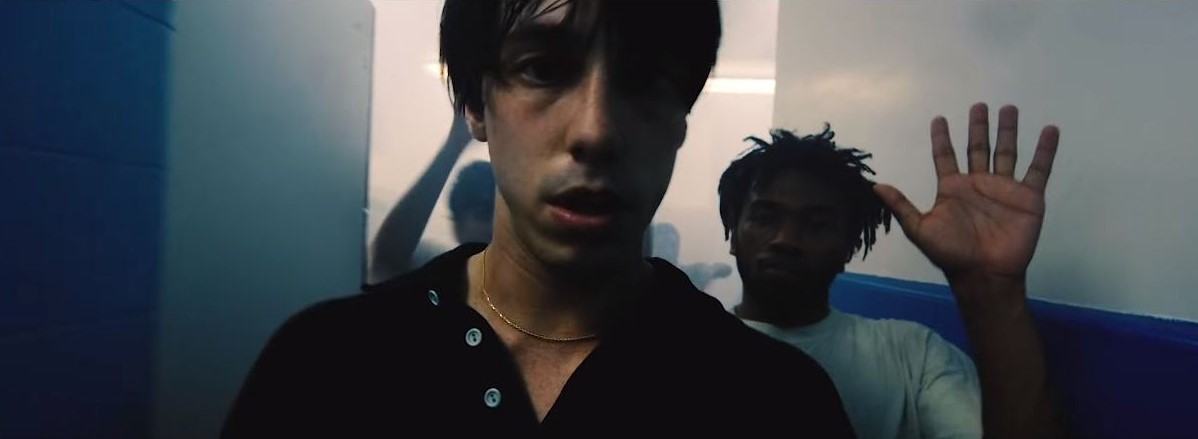
Over the last two weeks America’s favorite boy band Brockhampton has uploaded three singles that are all tied together by their titles. The first song was titled “1999 Wildfire”, followed with “1998 Truman”. The most recent in the series, called “1997 Diana”, came out last night complete with a video directed by Kevin Abstract. In classic Brockhampton style the track starts with a chorus and then a main verse, but quickly moves into multiple Brockhampton members trading 8 bar verses that loosely hang together thematically but are matching in energy. The group’s leader, Kevin Abstract sings the chorus, repeating, “Niggas talk shit, talk a whole lot of shit/Need to stop talking shit and give us more, more” over and over. The video, which is set in a gymnasium and a locker room, drips with masculinity so intense that you can almost smell it.
In May, Brockhampton kicked out founding member, Ameer, over sexual misconduct allegations and cancelled a handful of upcoming tour dates. They had already announced an upcoming album titled Puppy before the hiatus, but since then the album itself has changed and so has the title. In June, they appeared on Jimmy Fallon and announced that their upcoming album will be called The Best Years of Our Lives. What is interesting about the three tracks that they’ve released so far, is that the titles have been going in descending order starting with 1999, with a pop-culture reference from each year. “1999 Wildfire” is a reference to a documentary from 1999 called Wildfire: Feel The Heat. Next, “1998 Truman” refers to The Truman Show which was released in 1998. “1997 Diana” is a reference to the widely seen and publicized death of Princess Diana. The other single that they have released was simply called “Tonya”, but if the other tracks show a trend it may be called either “1994 Tonya” in reference to the actual events or “2017 Tonya” if the movie references continue.
The song names poise an existential question about public tragedy and memory. It seems that Brockhampton is challenging the soft nostalgia that internet culture places on the 90’s by bringing tragedy to the forefront. Rather than the warm blanket of “only 90s kids remember” that is thrown over the decade, they point to a time when it wasn’t normal for our lives to be in the public eye, and the paranoia and fear that came with the idea that we are moving into a future where everything is always public. Think about why Diana died, running from tabloid scandal, or the central theme of The Truman Show where Jim Carey lives his life as a part of a show for everyone’s entertainment. Then think about the Kardashians and how normal that is now.
The album is called The Best Years of Our Lives and the tracks are all named after years that the members have lived through so it may also be a question of how we qualify a year. What makes a given year better than another? This has been a prominent part of the national dialogue since Trump took office in 2016. I’ve seen 2016, 2017 and 2018 each called the worst year of all time, but the internet (and thereby public opinion) is full of hyperbole. However, that hyperbolic view of existence goes both directions. We are so quick to label things as “the best” these days that it has come to mean nothing. In an age of oversaturation how are we ever sure that anything is really the best? And in the internet era, how are we ever sure what is private and what is public? Brockhampton knows this all too well after being surrounded by controversy for the past 3 months. It will be interesting to see what the rest of the references are, and if they answer the questions that they are bringing up.
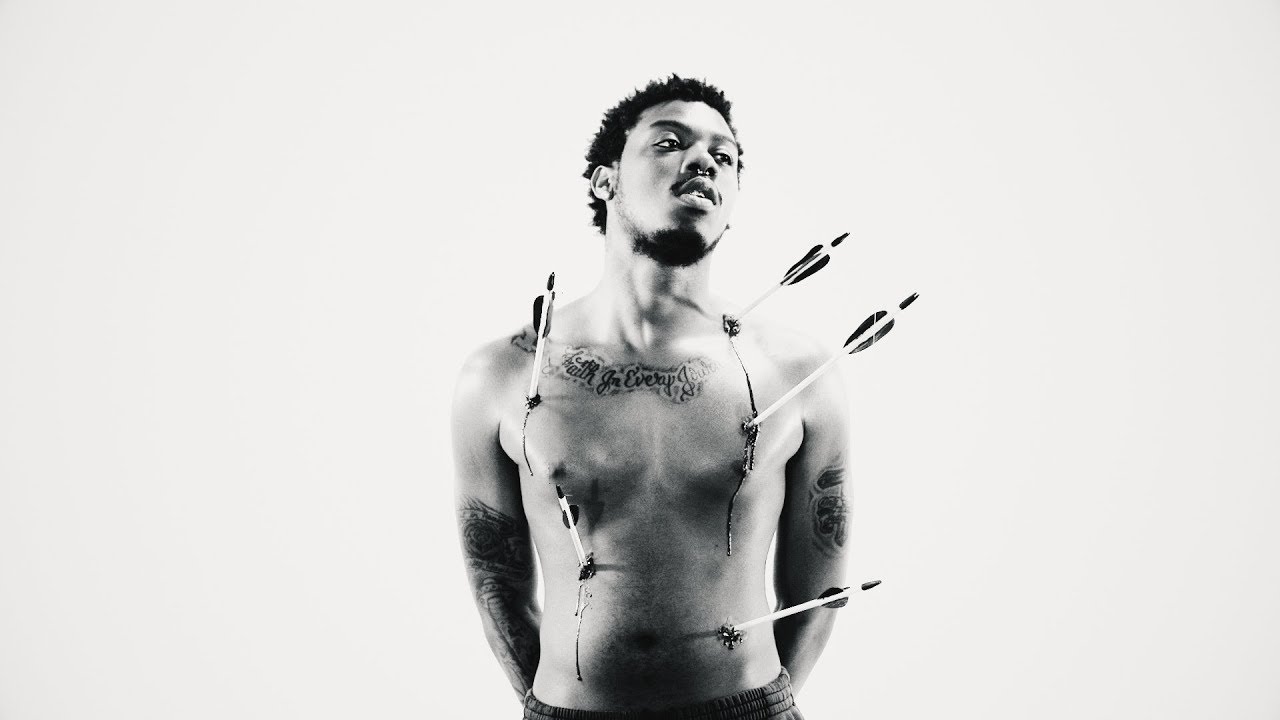
RH First Look: PK Delay
I had the pleasure of sitting down with PK Delay a few weeks ago while I was back in my home town of Pittsburgh, PA. It was a solid 90 degrees outside which felt more like 100. After pulling up on Carson Street and walking over to one of his friends crib we sat down and started chopping it up.
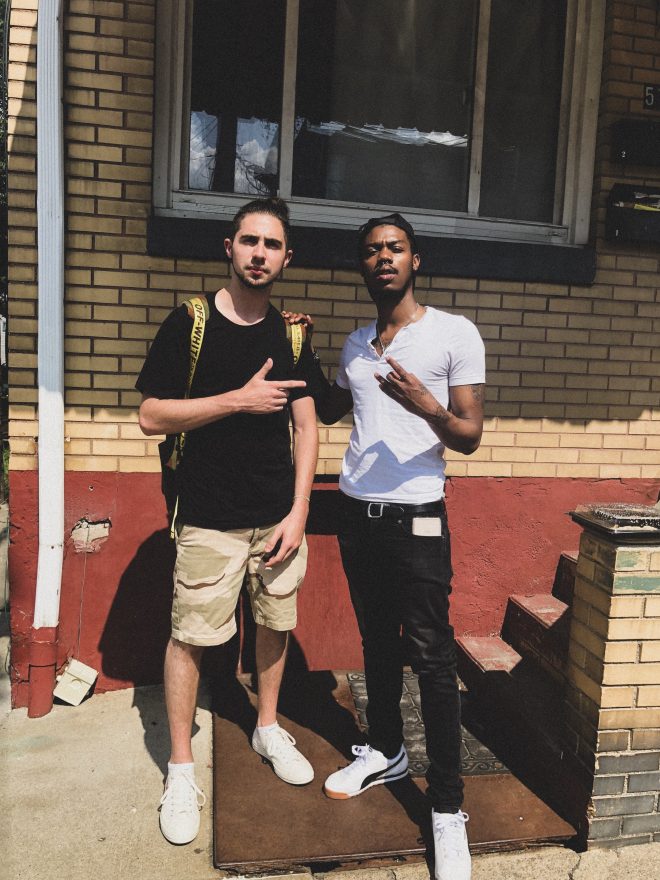
rubyhornet: For our readers not familiar with PK Delay, what can you tell us about yourself?
PK Delay: I’m a rapper. I play video games. Born and raised in the Hill District (Pittsburgh).
rubyhornet: How old are you?
PK Delay: 24
rubyhornet: What was the attention like you received from rapping in highschool?
PK Delay: I was clowned for the first few years before people started taking me serious. It wasn’t genuine hate, just on my ass for wanting to be a rapper.
rubyhornet: Did other people rap in you school?
PK Delay: Yeah, I met Pet Zebra when I was in 6th or 7th grade. We best friends now. Some of his friends from his high school started rapping with us. We started recording at a home studio. The quality and production was decent so we sounded good. My father is a gospel singer and my grandfather is a drummer. It’s in my blood.
rubyhornet: Were you spending money on music at this point in time?
PK Delay: Yeah I was working at Taco Bell. Whatever I got from my check would be spent on music. We were recording our own shit, so we would be grabbing better speakers, interfaces, etc. I know how to mix well, but tend to head to other studio’s more now.
rubyhornet: What’s it like to be an artist from Pittsburgh and obtaining a platform?
PK Delay: We got a lot of rappers around here. Some of them suck. Some of them are alright.
rubyhornet: Where is most of your audience coming from?
PK Delay: 2012-2014 had a lot of growth on my social media. A good mix of the city (Pittsburgh) and other places like Atlanta and the west coast have been showing love online.
rubyhornet: Near the end of “On That” a saxophone comes in and the track fades out. Who produced this track? Who are some producers you have been rocking with?
PK Delay: Jay Card, he works out of I.D. Labs. My bro laid the saxophone down live at the studio. I wanted some live instrumentation on their, so bro came through and played the saxophone to a flow I had.
rubyhornet: How would you classify yourself?
PK Delay: Emotional. Comfortable. I be speaking my mind.
rubyhornet: Would you consider your fashion similar?
PK Delay: Yeah. I rock whatever. Wear my hair however. Tattoos.
rubyhornet: Tell me about disappearing off Twitter and Instagram for the past few months.
PK Delay: I be dealing with anxiety and stress. Sometimes I be too tapped into my phone. Scrolling all day. 20 mins to an hour goes by and I'm like what did I accomplish just scrolling? I'm tapped into everyone else and I just needed to take some time for me. The break felt great. I had to get back on it now for the music.
rubyhornet: Plans from here on out?
PK Delay: Keep dropping music and videos. Got a few videos in the cut. Exploring different lanes with the music. Rap is boring to me. It’s easy. I want to try some more singing type stuff.
[youtube id="fHa0nDmRziw"]
[RH Collectors] Stitch Gawd
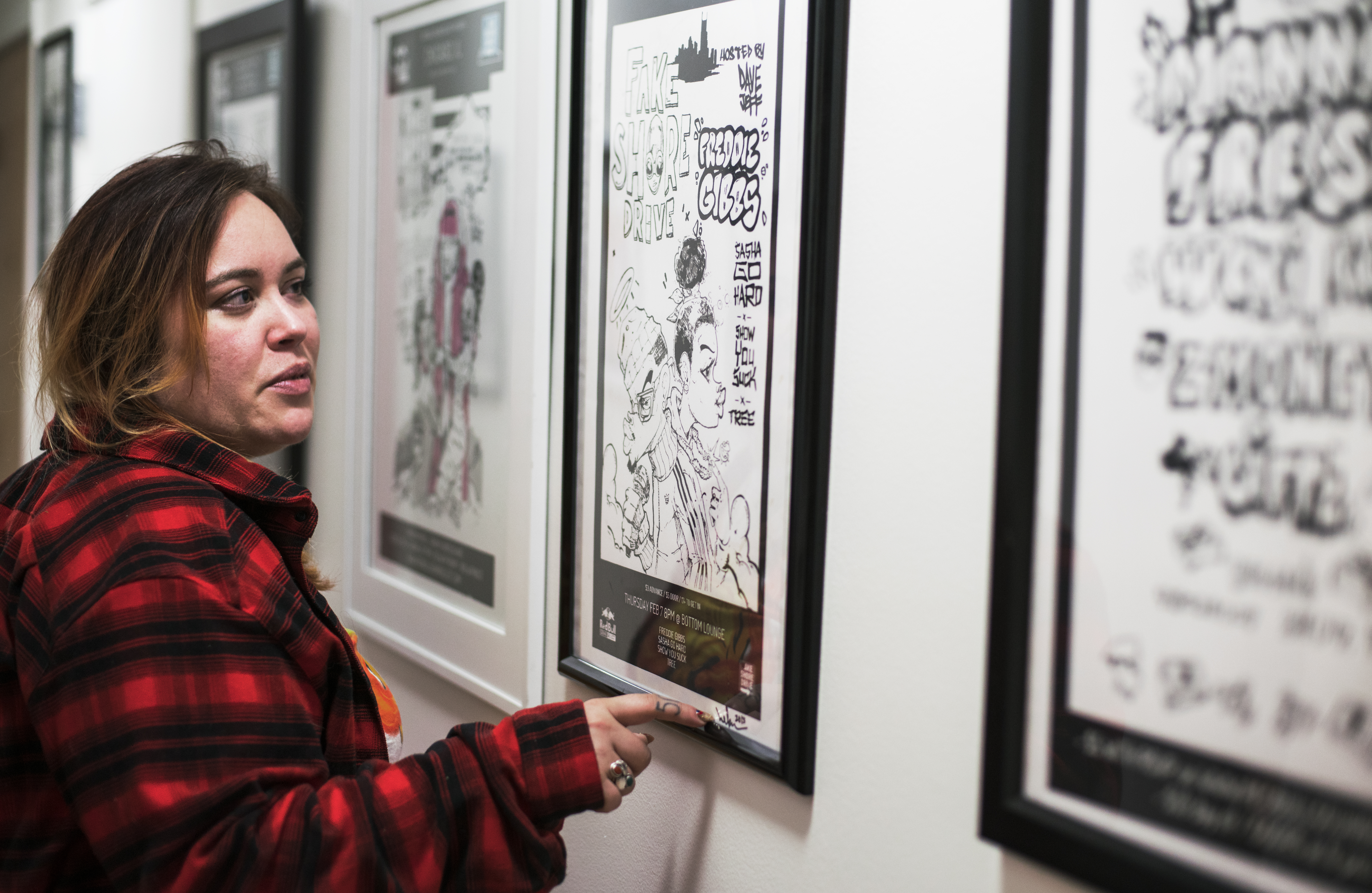
Walking in to Stitch Gawd’s apartment is the closest thing to walking into a Chicago rap scene museum that I have experienced thus far. Everywhere you look there is art created by, for, or about Chicago Hip Hop. Art on the walls, art on the floor, even the in the bathroom (which is a shrine to Joseph Chilliams). She has hundreds of signed show posters, photos, paintings, flyers and everything else in between.
Standing in the middle of her living room she looked around and started pointing things out at a rapid pace. “That Max Sansing illustration is from Kevin Coval’s book, that’s an original Hebru Brantley," she says before spotting something from photographer Bryan Allen Lamb (who has done multiple CS photos and docs). "That’s the first piece that Bryan Allen Lamb ever sold, I forced him to sell it to me. I was like, how much did it cost you to frame that, $350? Would you let me walk out of here with it for $450? Like, I Venmo you $450 and I leave with your art? And he said ‘Okay, for real?’ and I said, 'go get it.' So that was the first piece he sold, I made him sell it to me. That’s a Brandon Breau piece over there.”
Because she never sells her own work - creating customized clothing for her favorite artists - she has done a lot of trades. Over the years her continual presence within Chicago’s music scene has led to her meeting, and trading with, some of the most important artists in the city. But it wasn’t until this interview that she fully understood that she is in fact, an art collector.
“Oh my gosh, I’m an art collector! We’ve lowkey been talking about that the whole time… Wow I didn’t know that til right now. Oh my god I’m kinda blown actually," she said. "Art is such a nebulous concept and because it’s so nebulous, we have a hard time giving ourselves the space to grant yes or no, we want to make sure we have everyone else’s opinion before we deem it art or not, but really we don’t have to do that. Wow, so I didn’t know I was an art collector.”
For this edition of [RH Collectors], we asked The Stitch Gawd about some of her favorite pieces. Below you will find a handful of the 160+ works of art and some of the stories behind them. Check back for our full in-depth interview with Stitch Gawd dropping soon.
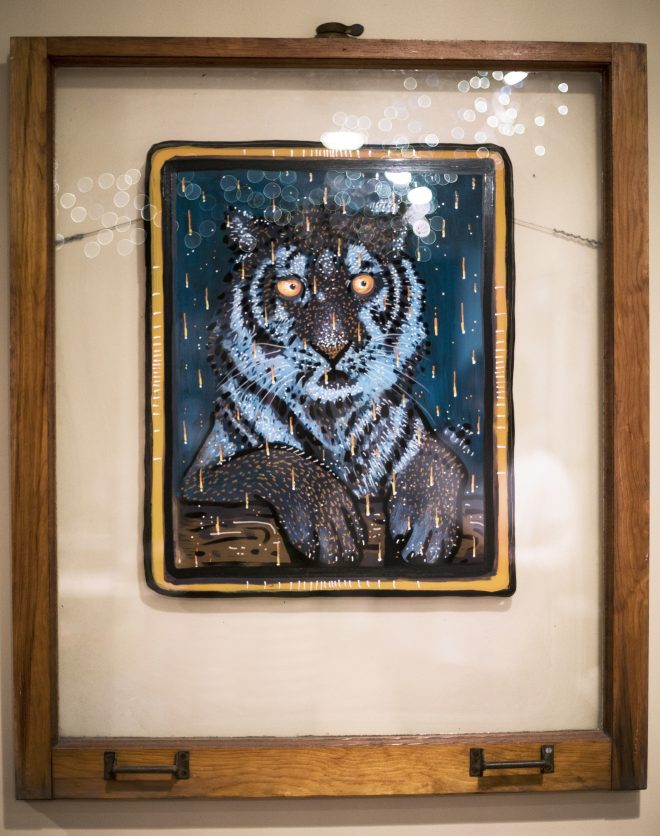
Sick Fisher
That’s my guy. I bought that on coloring day, I named him Carlos and I thought it was 8 x 11 and in my 600 square foot apartment it was HUGE. I did not have room for him.
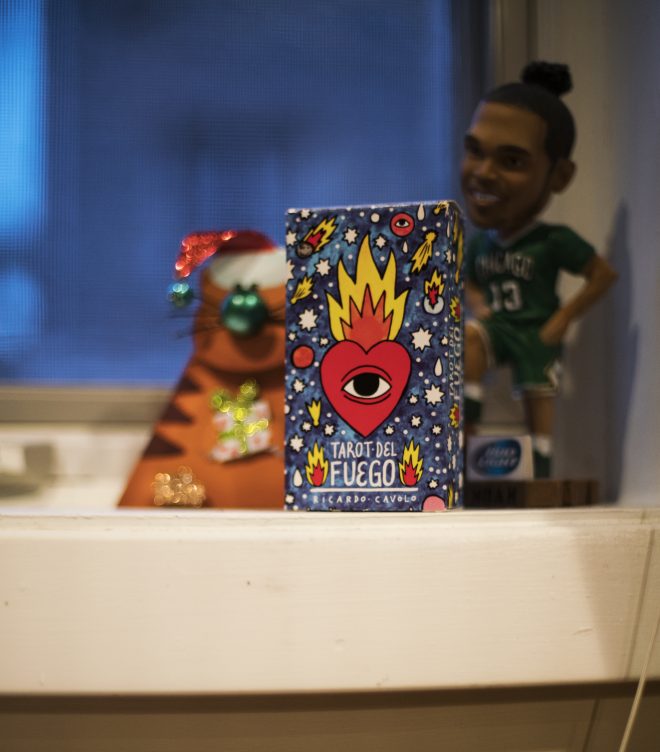
Ricardo Cavolo Tarot Cards
Do you know Ricardo Cavolo? Kaytranada’s artist. Because I did that Kaytranada jacket, it was amazing and he was shocked. He’s the nicest guy, Kevin’s the best.
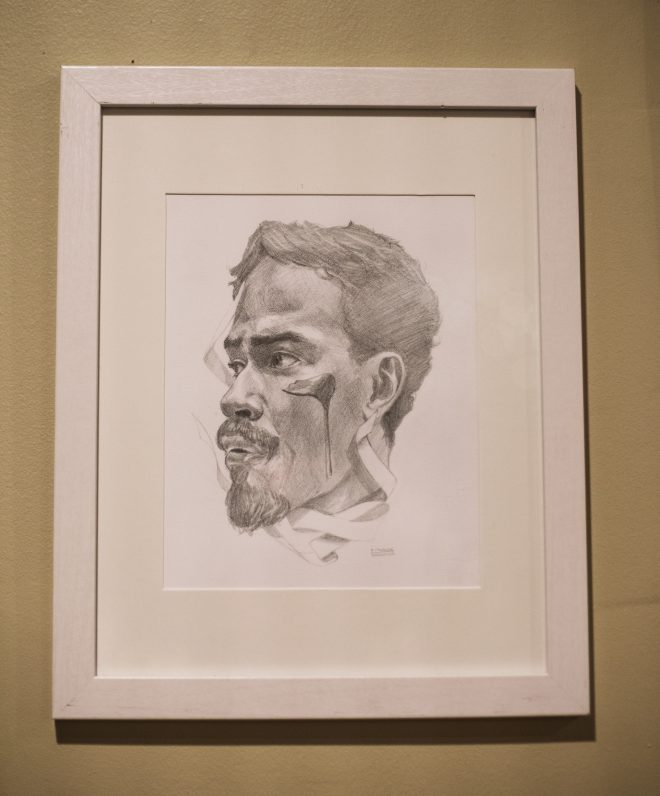
Max Sansing Portrait of Jean Baptiste Point du Sable
My favorite book ever was Chicago: City on the Make by Nelson Algren, but then I really really love Kevin Coval’s last book A People’s History of Chicago. Max Sansing, who is an incredible artist did this portrait of Jean Baptiste Point du Sable, a Haitian guy, the first legit resident of Chicago, guess what? Not remembered all that well in the history books, he has like, one street. Anyway, so Max Sansing did this illustration. I went to the art show for Kevin’s book, and I walked in and just had to get it. I’ve always wanted a Max Sansing piece, he almost never does stuff this small or black and white, he does a lot of mural work, he did the Fred Hampton piece at YCA recently. That’s kind of the scale he does. The chance to have a Max Sansing piece, especially of such a pivotal character to Chicago in my home was unmissable for me. I wasn’t in a great financial situation to go around buying art like that, but I had to have it, I stretched myself to get it and I’m so glad I did because it’s one of my favorites.
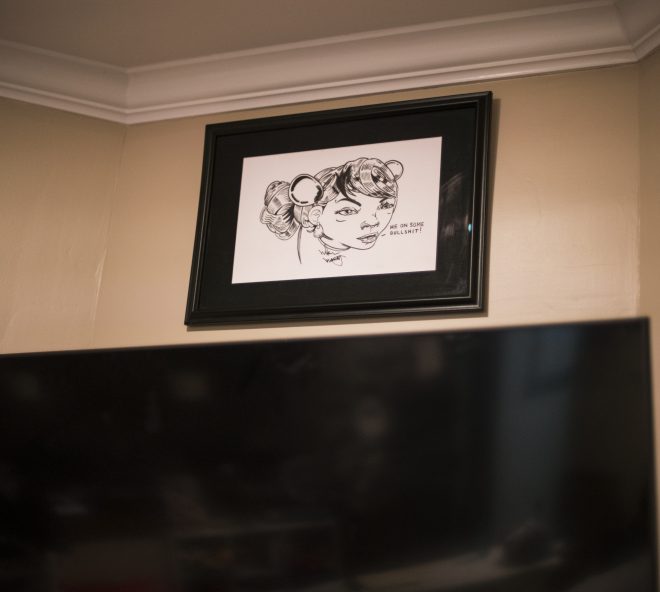
Hebru Brantley
Hebru had a pop-up across the street from Lollapalooza the first year that Chance played, and Red Bull had gotten me a free wristband to Lollapalooza. I went to this pop-up and, on my first credit card, this was the most expensive thing that I had ever bought. I was not an extravagant person, this was the early days at the coupon factory, so I fucking stretched myself. I think I spent like $275 on that. But you can’t do that now… he made it.
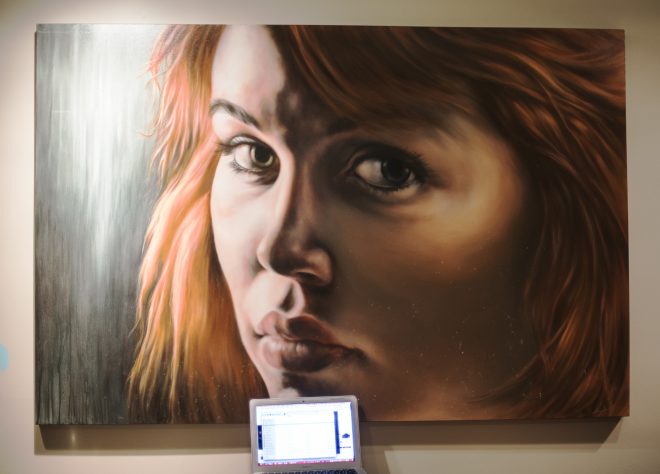
Lori Dell
I used to manage this artist who did large scale portraiture, she’s Canadian, her name is Lori Dell. She’s done sittings with Javier Bardem, Uma Thurman and Anthony Hopkins. She actually had art in that Tim Meadows movie, "The Ladies Man"... I was categorizing her art because a lot of management things in the art world is translating between the commerce side of things and the art, so I was helping her out, but then I had to get out of Toronto. I kind of had a situation with her son. He was an amateur photographer, this may or may not be a picture that was taken of me while the rest of me was as god intended you feel me? So imagine my surprise when I was called over to the house and Lori was like, “I have a going away present for you.” So I walk into her studio, and lo and behold there’s this massive oil painting of my face from that picture, I know what fucking picture it is, and it is a picture of just my face, but I know what the context is, so I was like, 'how dare you give that picture to your mother for her to paint this glorious oil panting?!?' All of my guy friends have told me you can not put that in your bedroom, that is far too much pressure, especially because my bedroom is bright pink.
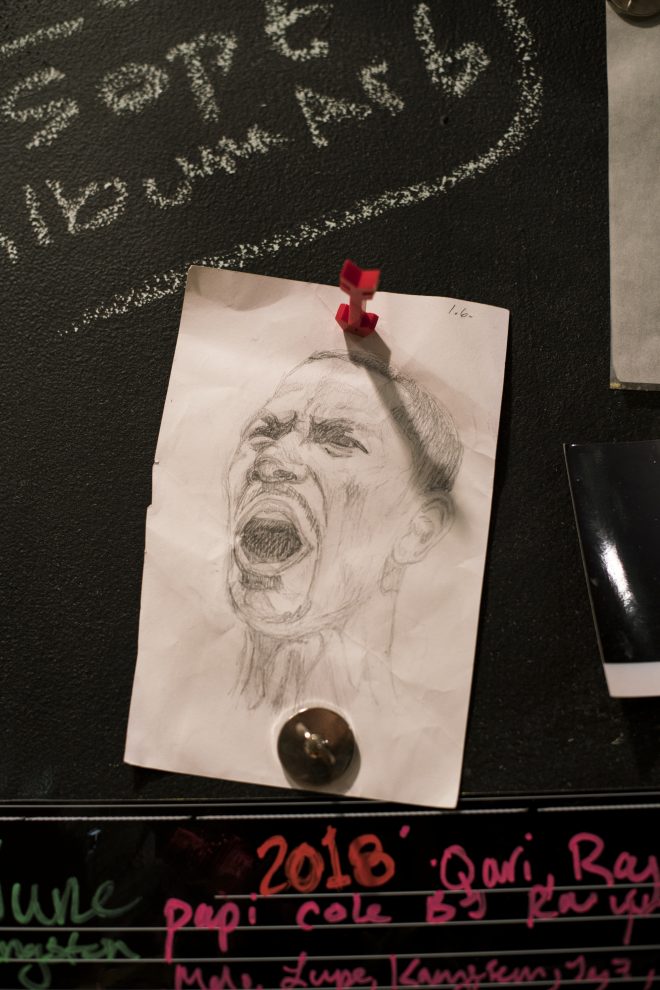
Michael Jordan Sketch
This is a really good one actually. There’s this basketball blog where they do basketball art, and this guy did this picture of Joakim Noah and I love Joakim Noah so I asked him to print me a print and he did but he also sent me some of his sketches and I think that’s Michael Jordan.
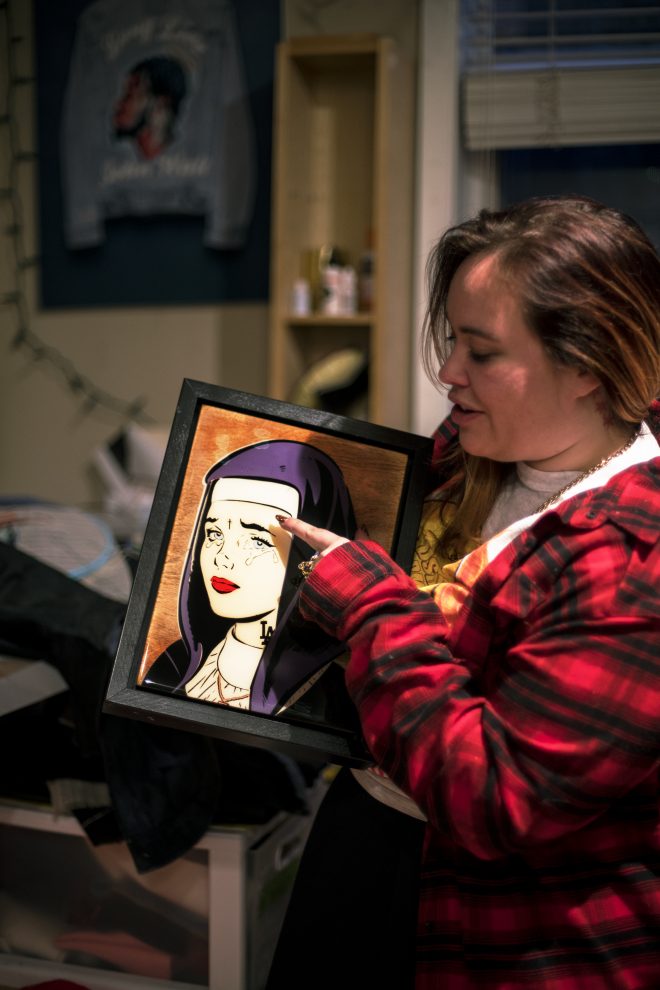
R64
This is this artist from Indiana named R64. He had this giant piece and it said Daddy’s Girl at the top and she was weeping, it was much bigger. It was like $400. I was like, listen, I can’t afford that but I love this piece so much. I stitch, can I stitch you something for that? And he was like, no, I’m not really interested in your stitching but here’s what’s up. I’ll make a mini version of it and I’ll charge you like $75 for it and I said bet, let’s go. So I stretched myself again, so this was one of my first real ones. It’s an original, a tiny original, but an original you know? That’s the exciting part of it. The adventure in art collecting is having a piece of someone’s work that you really love. I’ve never thought of it as a way to monetize, I just want the art that I want in my home.
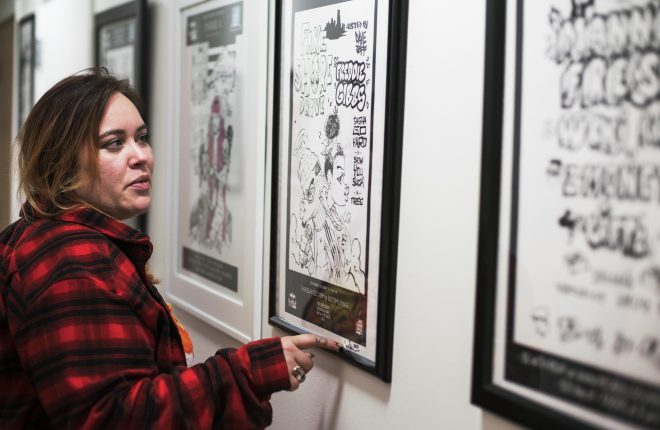
The Hebru Wall
These are all Red Bull Sound Select. When Hebru wasn’t nearly as poppin’ he used to do all of Andrew’s posters for him because they were homeboys. Andrew and I were neighbors, we lived like two blocks from each other so we used to see each other in the neighborhood. This one, this guy at Red Bull was trying to make me think that he was cool so he gave me a signed Hebru print, I’m like, you’re so dumb, but I’ll take it. I used to get in line hours before shows because I really wanted the prints.
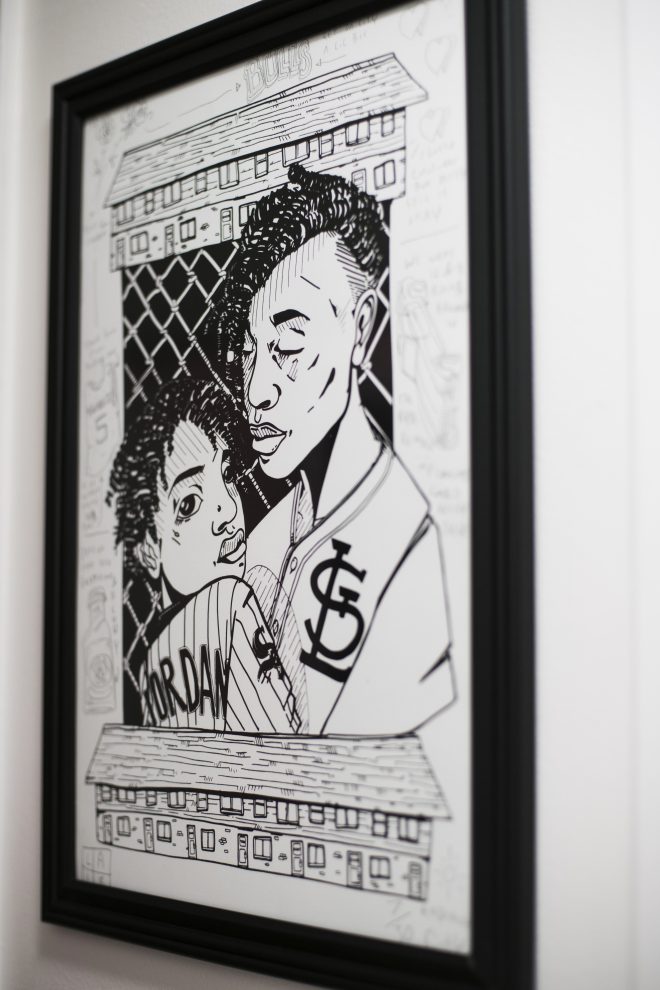
Langston Allston Print
This is Langston Allston from the show that I did with him.
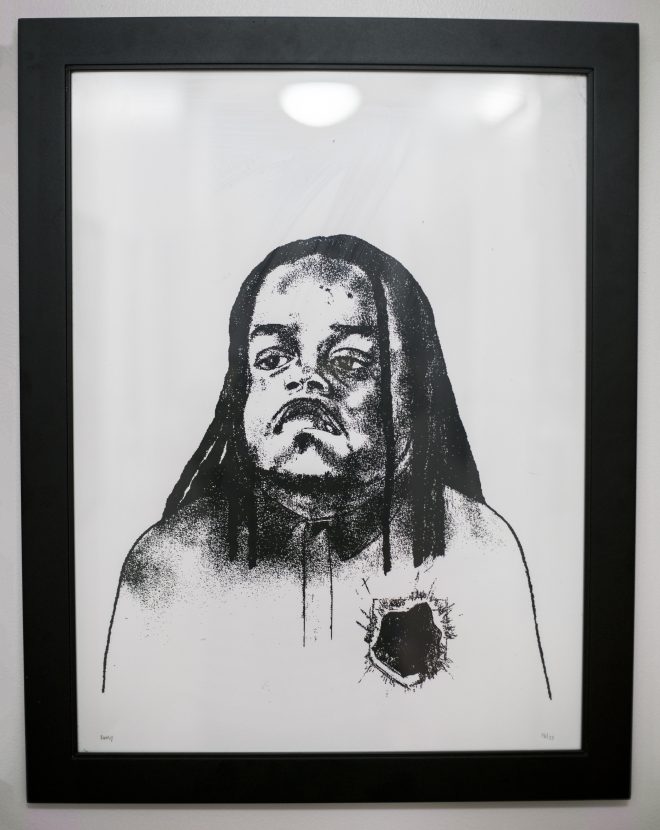
Runsy Print
Runsy is the fucking coldest. When I and bought this print from the show they were trying to give me a bogus copy and she had words with them and was like “No, she gets one of the good prints”
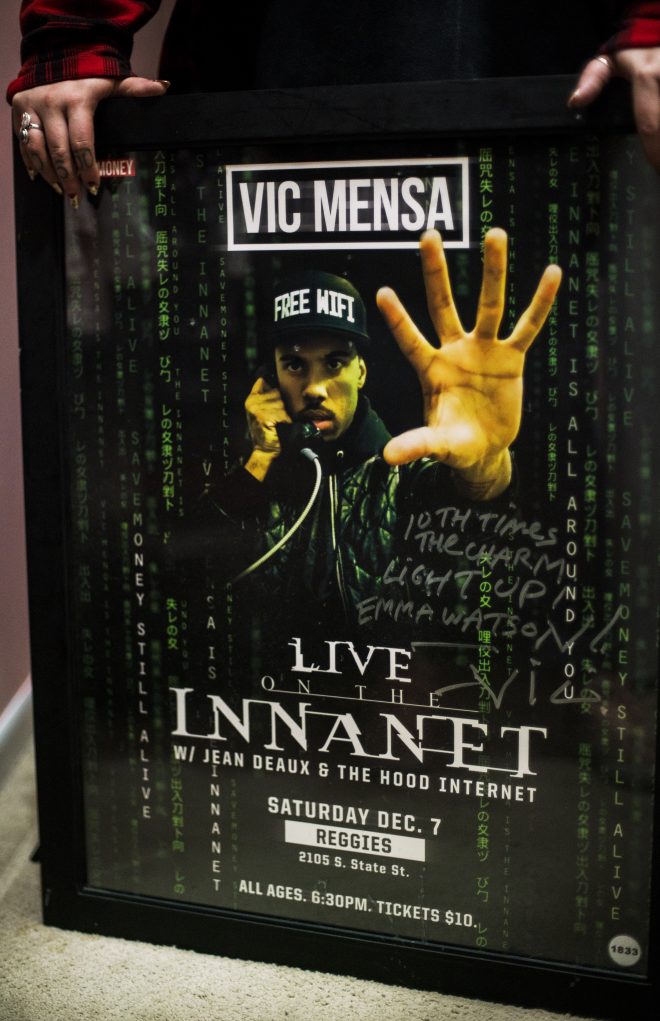
Vic Mensa Poster
I greened out at this show, I almost threw up on Alex Wiley. Anyway, I was standing in line and he was like, “you look familiar.” I was like, “Vic, we’ve met like ten times.” Tenth times the charm… “Light it up Emma Watson”.
[RH Interview] Meyhem Lauren: More Pressure
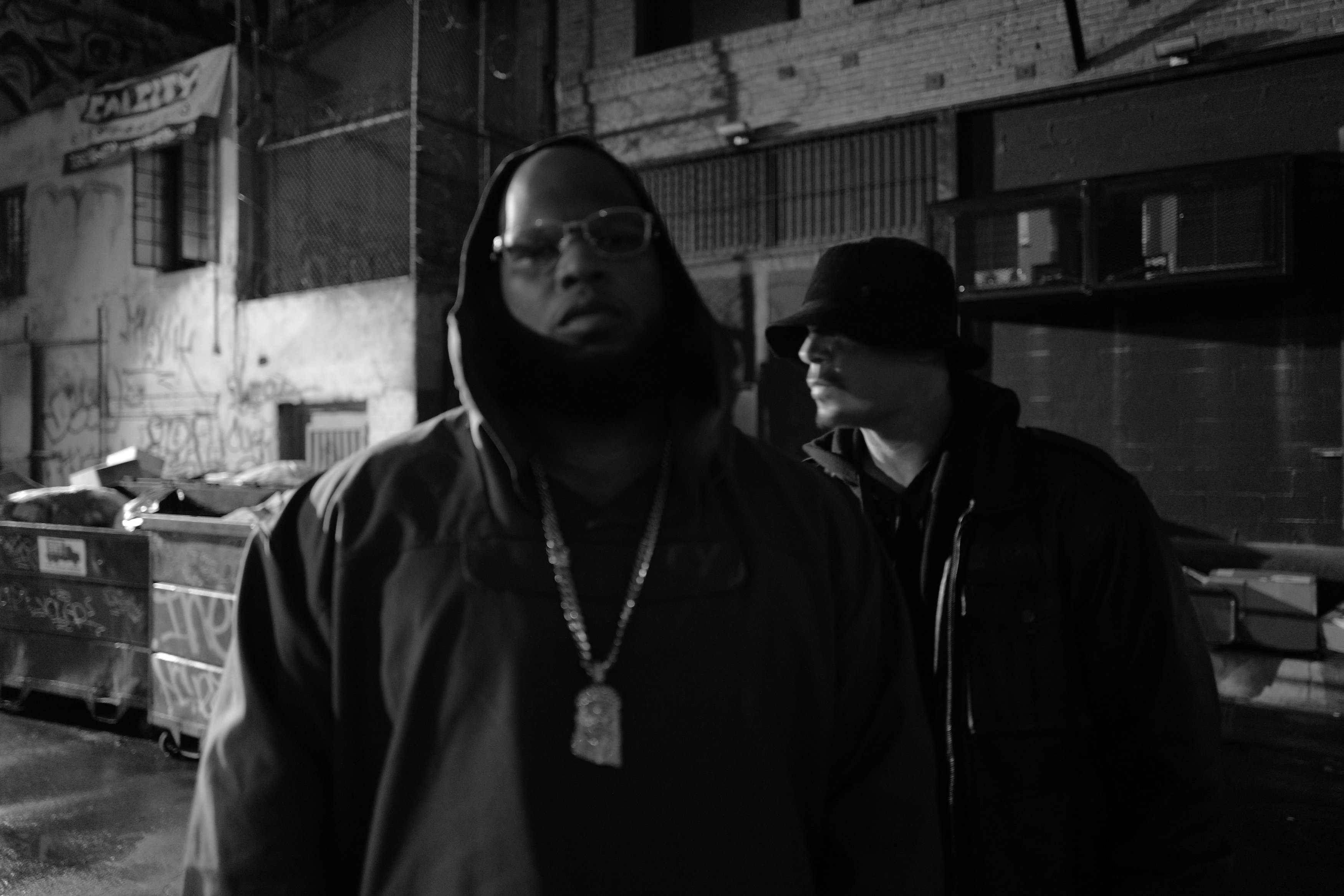
Meyhem Lauren loves turkey. I know this because I just spent last night binge watching episodes of "F*ck That's Deicious", the VICELAND show in which Meyhem Lauren travels all over the world with Action Bronson, The Alchemist, and Big Body Bes. Meyhem serves somewhat as the straight-man on the show. If Bronson is the foodie extremist, displaying an appetite that possibly only he alone can maintain, Meyhem is the regular guy that shows everyone else, 'hey, maybe these brains aren't so bad to try after all.'
In his rap music, Meyhem exists in a similar manner. One of my favorite emcees when it comes to making straight-forward rap music. Wordplay, metaphors, grimey shit, beautiful shit, that's Meyhem's music, which most recently took the form of an album (Gems From The Equinox) and EP (Frozen Angels) with the legendary DJ and producer Muggs.
"Mey raps. Mey is a monster," Muggs tells me over the phone on an early morning in late June (the same morning Muggs released this with DOOM and Freddie Gibbs).
The story has been told before, the one about how Muggs and Meyhem met during a session at Alchemist's studio, Muggs threw him some beats, some time went by, he threw him more beats, and they decided to do a project together. That became the 2017 release, Gems From The Equinox. They had so many songs done that they came back with the Frozen Angels EP, which you may have missed amidst all the Drake/Pusha/Kanye hoopla. And if you did miss it, stop what you're doing and go listen.
The shits is tremendous. And it's just the start. While those releases were predominantly completed over email, the two have since been in the studio together regularly. They are now shaping music hand in hand, and both say it's their best work together yet.
"At first I was just throwing him tracks you know, and he would pick what he likes and then he rapped on them," Muggs says about the early material. "But now we are dialed into a sound. So even the stuff we're [now] doing doesn’t sound anything like either the Frozen Angels or the Gems. It’s just like, now we're in studio everyday, and just like, figuring it out. Now I'm really dialed into the new sound to make him shine even more."
The bond between Muggs and Meyhem was strengthened by their shared aesthetics, musical preference for Mobb Deep and CNN. And while Muggs is so closely associated with LA Hip Hop thanks to his work with Cypress Hill and the Soul Assassins, both he and Meyhem actually grew up Queens. Oh, and they both love food.
"When we first started working it was kind of like, he’s Muggs, I’m Mey," says Meyhem about their early relationship. "But now it’s like, you know, we're friends, we're fam, that’s my man. We rode around laughing and throwing lobster tails on the grill."
Read on more my full interview with Meyhem Lauren as he talks about working with Muggs, his style of Hip Hop, and how all the success of "Fuck That's Delicious" only makes him want to rap more.
https://youtu.be/l3RW2hVR5Uk
rubyhornet: I believe that Frozen Angels came out the same week or shortly before the Nas album and in the middle of all the G.O.O.D. Music releases, and the Pusha and Drake beef, and then you got the 6ix 9ine's trolling shit. Did you guys think at all about where this project would sit with what is happening in Hip Hop overall right now?
Meyhem Lauren: We don’t ever think about that. We just think about what we want to put out, what we wanna represent and drop it. That’s it, you know?
rubyhornet: Yeah, he was saying too that you guys have been able to work more in person on new music, and that’s helped just making him better in working with you and creating more music. From your standpoint how has the relationship gone specifically working with Muggs?
Meyhem Lauren: I mean it sounds better. When we first started working, it was kind of like he’s Muggs, I’m Mey. But now, it’s like, you know we're friends, we're fam, that’s my man. We rode around laughing and throwing lobster tails on the grill. And I get what you said, like he knows more what beats suit me. Like I’ll be listening if the beat is ill or not. But that might not always be for me, like the beat that’s ill could be for B-Real for GZA or for someone else, may not fit with what I got. But now he just knows right away like, 'Yo, this is a Mey style beat.' We gotta have that chemistry, and that was crazy. In the last couple of days we knocked out 5 songs from the next project that are so crazy, they literally blow away everything we ever done before. We are just moving in the right direction.
rubyhornet: That’s exactly what he was saying and he also mentioned you guys grilling all the time.
Meyhem Lauren: Yeah (*Laughs*)
rubyhornet: Also speaking of that, you do work with different producers and are constantly writing and making music. The way that he might have a specifically beat for you, do you save any kind of style or is there any kind of subject or rhyme style that you wanna save for Muggs? And think to yourself yeah this is what I’m going to use on the Muggs project vs. something you do solo or Harry Fraud stuff. Is there any 'Muggs' kind of rap?
Meyhem Lauren: Naw, not in particular. Not where I’ll like plan to save a subject for Muggs, but Muggs makes dark beats. So it kind of brings darker rhymes out of me. Does that makes sense?
rubyhornet: Yeah that definitely makes sense.
Meyhem Lauren: Me and Muggs recently have been doing some up tempo beats. And I didn’t still try to strictly stay dark on that, cause that wouldn’t make sense. So it’s based on the beat, the beat brings the rhymes out.
rubyhornet: Yeah, obviously you’ve heard about Cypress Hill before you met Muggs. And I’ve read and seen interviews with you talking about just listening Cypress Hill’s music as a kid and a being big fan of Hip Hop. I’m curious if you had any just preconceptions of what it might be like to work with Muggs or even as a kid or aspiring rapper in your teens? The same way of someone who wants to be a baseball player might think about visualizing hitting a home run off Randy Johnson, had you visualized what a recording session with Muggs might be like?
Meyhem Lauren: No, the whole relationship started organically. I met Muggs at a recording session, I was at Alchemist's house. Working on completely different music, he came through, had some beats. He’s Muggs, so he knows about raps man. He was playing beats, and I had the opportunity to jump on a Muggs beat, like why wouldn’t I? And we just moved from there on. That was day one, day one was the session. We just got right to the work.
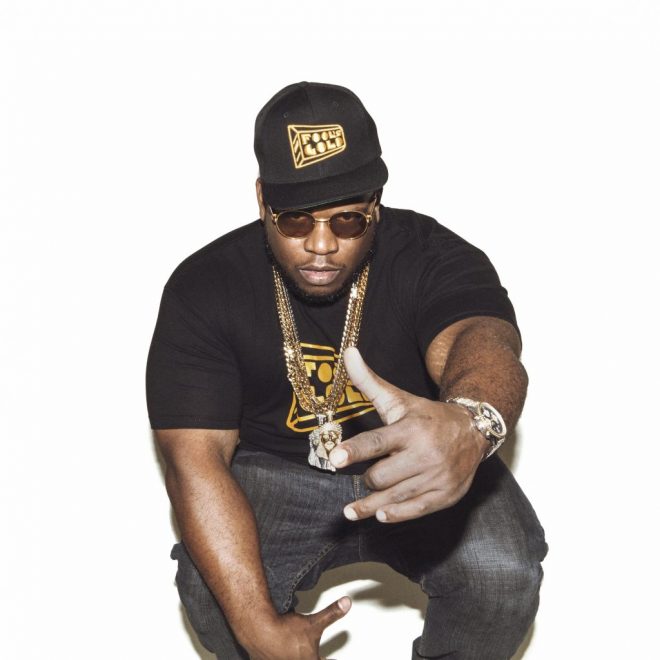
rubyhornet: Got you, Got you. I think I read a bio of yours that starts with….
Meyhem Lauren: Yo, I hate all these bios floating around (*Laughs*). I don’t even know who is writing these things? The only one good thing I can say is there’s a bio floating around where they shave like 5 years off my age. I’m not sure why, but I’ll leave that alone. But I don’t know what’s going on yo, I don’t even know what you’re going to say right now... But there’s a bunch of unauthorized bios all over the internet, I don’t even know how to fix that.
rubyhornet: Got you, I did see one that said you were born in 1989. And I was like I don’t know…
Meyhem Lauren: Yea exactly, I’ll take that (*Laughs*). I’ll keep it 100, I’m ‘83, but if you wanna say ‘89 hey.. Who am I to point that out. Everything else is wrong.
rubyhornet: Exactly, I read that and then I saw you talking about listening to Cypress Hill in like middle school or high school, like, 'Damn this motherfucker must’ve skipped like 5 grades. For Cypress Hill to come out while he was in high school'... But I read something where it described you, but I don’t know who wrote it, but it described you as a Queens based rapper that represents a genre of Hip Hop that is near extinction. And I thought that was interesting if you started your bio like that, maybe someone else wrote it. Do you feel that way?
Meyhem Lauren: Naw, you know what’s crazy? It’s actually a piece of a very old bio that I think that I wrote or someone else wrote. But it’s like someone just took all these bios and put them in the blender, and added things and put things that were never said. But yeah, I’m cool with that, and that does makes sense to be honest.
rubyhornet: So what does that mean to you? Why do you feel like it’s going through extinction? Why do you represent this genre so much?
Meyhem Lauren: I’m just playing my part. I’m just actually doing what I like. And I don’t think it’s necessarily going through extinction, maybe in the mainstream of the public eye it is. But it’s actually stronger… from what I feel. And I’m not talking about myself, because a lot of dope stuff that fits the category of that genre that has been on the rise lately. Like I said, it’s not like a niche thing or something like, 'Oh, I’m trying to be cool.' I'm really making what I like, I’m making what I’m listening to. Obviously it’s an updated version because of whatever year it is. But I’m just doing what I’m supposed to do, you know?
rubyhornet: Yeah, does having the success with the TV and cooking take any pressure, in your eyes, off making music? Does it go into this attitude of letting you making what you like?
Meyhem Lauren: Naw, my thing is 'more pressure.' Cause it’s like, I gotta remind dudes that I still rap. Matter of fact not just that I rap, but I rap first and foremost... I’m Meyhem Lauren, so it actually gives me more pressure to stay on top of my music.
rubyhornet: That’s interesting man. That’s an interesting concept, and I think that’s probably part of why you’re such a good rapper and artist. Is that you kept that mentality, where it might be easy for someone to be like 'I’m on TV, I have these other things. I’ll let that ride.' But you're attitude, now listening back to the music, it makes a lot of sense. So I think that’s dope.
Meyhem Lauren: You know something crazy? Beyond TV, I don’t know if you know, but I’m the voice of the World Cup. All week I have been doing voice ovesr for the World Cup. I’m at Fox everyday, updating games, and screaming and yeah doing crazy things. I just threw that in there cause I really wanna do voice overs now, I wanna cook food, but... I still wanna rap.
https://www.youtube.com/watch?v=JKJsEXVsftE
rubyhornet: Yeah, I saw that on your twitter like people were asking is this Meyhem Lauren on the World Cup Games? Are you a soccer fan or did they pick you for your voice?
Meyhem Lauren: I’m a soccer fan now. I love soccer. It saved my life.
rubyhornet: I also saw on your twitter that someone said something about you being a famous rapper and you replied, 'I appreciate that, but I’m just a regular guy from Queens.' And I feel like that sums up a lot. And is part of the reason that Muggs wanted to fuck with you. He said first and foremost you’re just a cool dude. Is that at the heart of how you see yourself or your identity?
Meyhem Lauren: Yeah, basically. Regular guy from Queens, it’s not like necessarily like average Joe regular, but regular meaning, I’m a certain type of person from Queens and there’s a bunch of people like me. That are in whatever. I’m just a regular guy from Queens, bro. I have been a rapper and done a bunch of things and I'm grateful for that. But that’s not who I am necessarily only.
rubyhornet: When we first worked with Bronson and brought him out here for our party and Closed Session, he said the exact same thing, and when we were just talking he was like 'I’m just a regular guy, I make music, but i’m just a regular dude from Queens.' That seems like that's a key part of your bond. And I know that you guys are real friends from like 12 years old.
Meyhem Lauren: Yea that’s my man forever.
rubyhornet: Outside of the Muggs, you said that you guys have another album that you’re working on now. Is there any other music or things that you want people aware of?
Meyhem Lauren: In between Gems from the Equinox and Frozen Angels I put out an album with Fraud.
rubyhornet: Yep Glass right?
Meyhem Lauren: Glass, yep and I loved that. It was a bunch of issues on the back end like it took while to get out so we kind of just threw it out there. But the feedback’s been incredible. Dropped a video with me and Conway. And I’m still gon’ drop one or two videos from that project.